
Helping Companies Hire The Best Drivers FAST... Guaranteed!
Take control of your perfect recruiting process to consistently grow your fleet without relying on crowded job boards or expensive recruitment agencies.
Helping Companies Hire The Best Drivers FAST... Guaranteed!
Take control of your perfect recruiting process to consistently grow your fleet without relying on crowded job boards or expensive recruitment agencies.
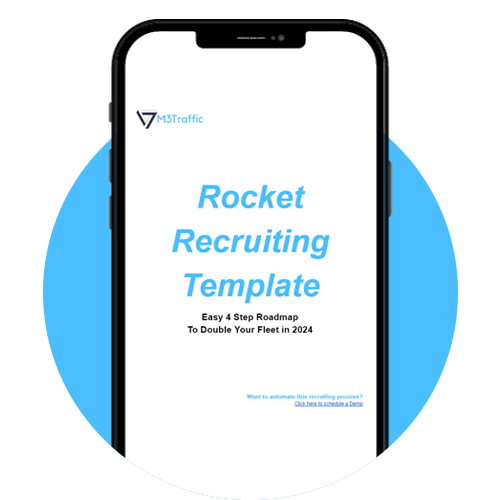
Download Our Rocket Recruiting Template
Easy 4 Step Roadmap To Double Your Fleet in 2026
Download Our Rocket Recruiting Template
Easy 4 Step Roadmap To
Double Your Fleet in 2024
Customers Who Use Us


Customers Who Use Us

Access The Entire
Driver Pool
No more relying only on the job boards. Easily access all the drivers in your market by launching ads in minutes that have been proven to work and generate over 80,000 leads.
"It's been just 1 week and we already have 4 interviewed drivers with confirmed interest including a lead driver with 7 others pending in the Savannah area."
Logan P.

Save Time and Focus On Qualified Candidates
Reduce wasted time on unqualified candidates by filtering them out and instantly engage with your qualified candidates. The largest processor of driver applications did a study to find that you are 30% more likely to hire a driver if you respond within 5 minutes. Qualified applicants will show up on your calendar asking you to call them and give them an interview.
“With your system, it does it for us, making our job a little easier. We couldn’t keep up with all the candidates we have without your follow up system. Most of our tenured drivers are because of your follow up system."
Jasmynn F.

Lower Your Cost Per Hire by Building Your Waitlist
As the saying goes, fortune is in the followup.
By building your own company database of drivers and storing it in your system, you have permission to message them at will free of charge because you own this database. Next time you need to fill a position, use your own database rather than relying on someone else’s advertising platform or a crowded job board.
“Robert had a list of 300 drivers built up in his waiting list. Using ALIS, he sent out a message to them and had 25 interviews scheduled almost instantly for free and filled his position in 2 days. "
Access The Entire
Driver Pool
No more relying only on the job boards. Easily access all the drivers in your market by launching ads in minutes that have been proven to work and generate over 80,000 leads.
"It's been just 1 week and we already have 4 interviewed drivers with confirmed interest including a lead driver with 7 others pending in the Savannah area."
Logan P.

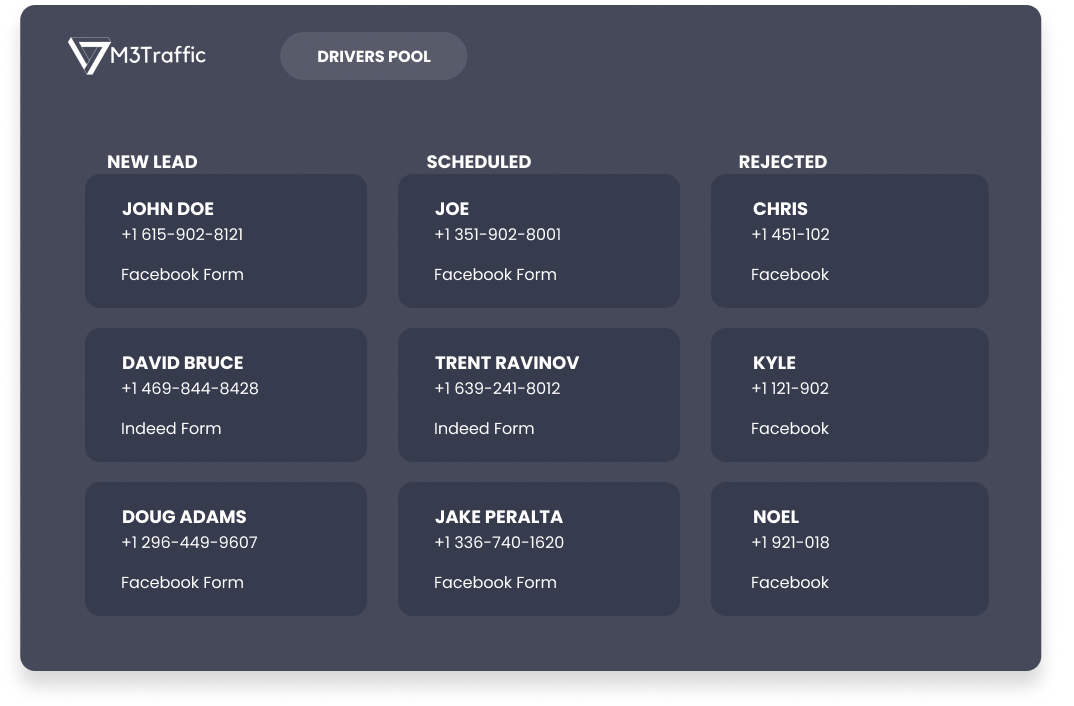
Save Time and Focus On Qualified Candidates
Reduce wasted time on unqualified candidates by filtering them out and instantly engage with your qualified candidates. The largest processor of driver applications did a study to find that you are 30% more likely to hire a driver if you respond within 5 minutes. Qualified applicants will show up on your calendar asking you to call them and give them an interview.
“With your system, it does it for us, making our job a little easier. We couldn’t keep up with all the candidates we have without your follow up system. Most of our tenured drivers are because of your follow up system."
Jasmynn F.
Lower Your Cost Per Hire by Building Your Waitlist
As the saying goes, fortune is in the followup.
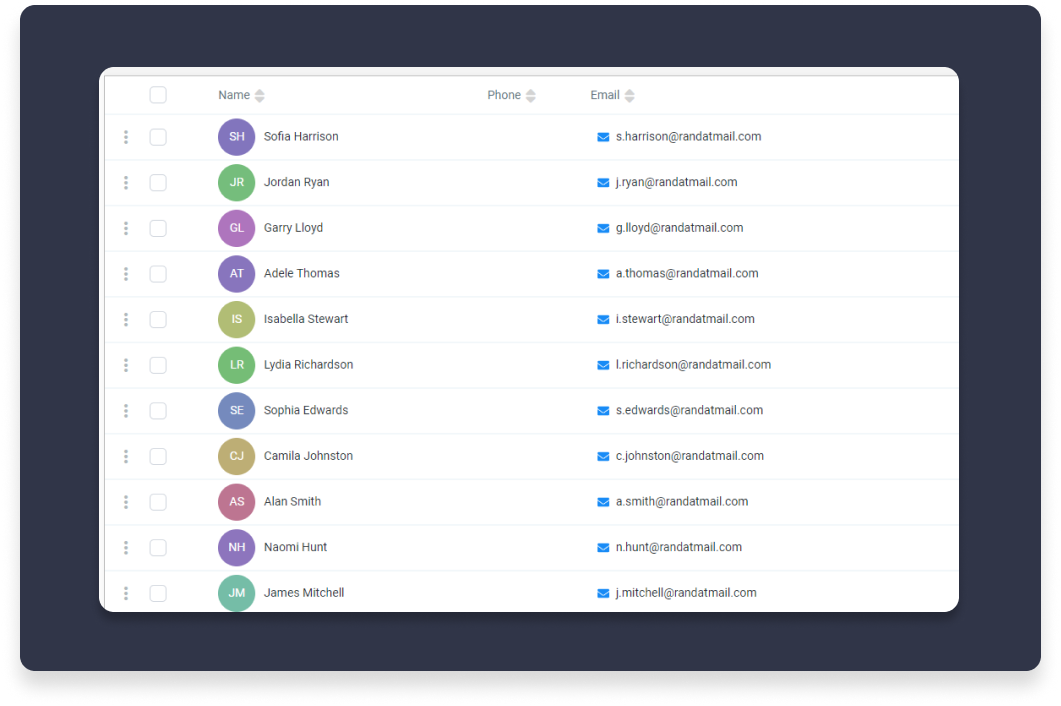
By building your own company database of drivers and storing it in your system, you have permission to message them at will free of charge because you own this database. Next time you need to fill a position, use your own database rather than relying on someone else’s advertising platform or a crowded job board.
“Robert had a list of 300 drivers built up in his waiting list. Using ALIS, he sent out a message to them and had 25 interviews scheduled almost instantly for free and filled his position in 2 days. "
Join the One Driver Away Challenge Today!
Ready to hire your next great driver? Take the challenge for only $99 – Pay once, and get lifetime access to the proven system that will help you recruit drivers quickly and efficiently. No more guesswork, no more wasted time.
Frequently Asked Questions
Is advertising spend included?
No, the budget that you’d like to allocate to any advertising platform will be separate. The budget you will spend to hire a driver will vary widely depending on a number of factors. For you to estimate, we usually see lead costs ranging from $3 - $20 per lead using adlaunch pro.
Can you manage the advertising for me?
Yes, we do have an option to manage the advertising budget for you and maximize the number of leads you get. This is an option if you have an ad budget exceeding $3,000 per month. Schedule a demo and we can discuss exactly how that works and see if you are a good candidate for that.
I already use Tenstreet, driver reach, or another ATS. Can I use this?
Congratulations on having a system that you use. We have various options of integrating with driver reach and tenstreet or other platforms depending on your need. Schedule a demo and we can walk through the best option for that.
Is there a long-term contract?
No long term contracts. We operate on a basis where we make sure that you are happy. If it’s not working for you, you are able to cancel with a written 30 day notice.
Latest Blog Posts

Why December Always Catches You Short-Handed
Why December Always Catches You Short-Handed
(And How Smart Companies Prepare for Predictable Chaos)
Here's a phone call we get every November:
"We need 15 drivers by December 1st for peak season. Can you help us find them in the next three weeks?"
Every. Single. Year.
The same companies that have been in business for decades, who know exactly when their busy season hits, somehow act surprised when they need more drivers for peak demand. They scramble to hire in November for December deadlines, compete with every other company doing the same thing, and wonder why recruitment gets so expensive and difficult during the holidays.
Meanwhile, smart companies started their peak season recruitment in August. They're fully staffed by November while their competitors are panicking and paying premium rates for whatever drivers they can find.
The difference isn't luck or better markets – it's understanding that seasonal demand fluctuations are predictable problems that require proactive solutions, not reactive scrambling.
The Seasonal Recruitment Trap That Kills Your Budget
Here's what happens every year to companies that don't plan ahead: They operate with just enough drivers for normal demand, then get hit with seasonal spikes that overwhelm their recruitment capacity. Suddenly they need to hire 20-30% more drivers in half the usual time, while competing with every other unprepared company doing the exact same thing.
The result is recruitment chaos. Application volumes spike but quality drops because everyone's fishing in the same desperate pool. Response times slow down because recruiters are overwhelmed. Hiring standards get compromised because you need bodies in trucks. Costs skyrocket because you're competing for limited available drivers during peak demand periods.
You end up paying premium rates for lower-quality drivers, accepting candidates you'd normally reject, and still falling short of your staffing needs. The seasonal spike that should boost your profits instead destroys your recruitment budget and operational efficiency.
Why "Seasonal" Demand Isn't Really Seasonal
The biggest mistake companies make is thinking seasonal demand fluctuations are unpredictable events rather than recurring business cycles. They treat peak season hiring like a natural disaster that strikes without warning, instead of a predictable pattern they should prepare for months in advance.
Your seasonal demand isn't seasonal – it's cyclical and predictable. You know when your busy periods hit. You know approximately how many additional drivers you'll need. You know your competitors face the same challenges at the same times. This information should enable proactive planning, not reactive scrambling.
The companies that struggle with seasonal fluctuations are those that staff for average demand and hope they can scale up quickly when needed. But recruitment doesn't scale instantly. Building candidate pipelines, screening prospects, and completing hiring processes takes time that you don't have when you're already behind schedule.
The Smart Company Approach to Seasonal Staffing
Companies that handle seasonal fluctuations successfully don't try to hire their way out of demand spikes – they build recruitment capacity ahead of demand curves. Here's how they do it:
Early Pipeline Development: They start building candidate pipelines 3-4 months before peak season. While competitors are focused on current needs, they're identifying and nurturing prospects for future hiring needs.
Capacity Planning: They calculate their peak staffing requirements and work backwards to determine when recruitment needs to start. If they need 15 additional drivers by December 1st, they start the process in August, not November.
Proactive Recruitment: They increase recruitment activity before they need additional drivers, building a qualified candidate pool they can draw from when demand spikes. This eliminates the scrambling and competition that drives up costs during peak periods.
Flexible Staffing Models: They use part-time, seasonal, and contractor arrangements to handle demand fluctuations without committing to permanent hires they won't need year-round.
Retention Focus: They work harder to retain existing drivers during peak seasons, knowing that replacing drivers during busy periods is exponentially more difficult and expensive than keeping current ones.
The Three-Month Rule for Seasonal Success
The most successful companies follow a simple rule: Start seasonal recruitment three months before you need the drivers. This timeline accounts for the complete recruitment cycle while avoiding the competition and cost inflation that happens when everyone starts hiring simultaneously.
Month 1 (Three Months Out): Begin building candidate pipelines and increasing recruitment activity. Focus on identifying and engaging prospects who might be interested in seasonal or permanent opportunities.
Month 2 (Two Months Out): Intensify screening and interviewing processes. Make offers to top candidates and begin onboarding processes for early hires.
Month 3 (One Month Out): Complete final hiring pushes and focus on retention strategies for existing drivers. Handle last-minute needs from your pre-built candidate pipeline rather than starting from scratch.
This timeline ensures you're fully staffed before peak season begins, while your competitors are just starting their recruitment scramble.
Stop Getting Surprised by Predictable Problems
Seasonal demand fluctuations aren't surprises – they're recurring business cycles that smart companies prepare for systematically. If you're scrambling every year to find drivers for predictable busy periods, you're not dealing with bad luck or difficult markets. You're dealing with poor planning.
The solution isn't working harder during peak periods or paying premium rates for desperate hiring. It's building recruitment capacity ahead of demand curves and treating seasonal staffing as a predictable challenge that requires proactive solutions.
Your competitors will continue scrambling every November for December drivers, competing with each other and driving up costs while compromising on quality. You can avoid this chaos entirely by starting your seasonal recruitment when they're still focused on current needs.
The choice is yours: Join the annual scramble and pay premium rates for whatever drivers you can find, or plan ahead and be fully staffed while your competitors are panicking.
Ready to stop getting caught short-handed by predictable seasonal demand? Learn how to build recruitment capacity ahead of demand curves and avoid the annual scramble that destroys budgets and compromises quality.

Latest Blog Posts
Why December Always Catches You Short-Handed
Why December Always Catches You Short-Handed
(And How Smart Companies Prepare for Predictable Chaos)
Here's a phone call we get every November:
"We need 15 drivers by December 1st for peak season. Can you help us find them in the next three weeks?"
Every. Single. Year.
The same companies that have been in business for decades, who know exactly when their busy season hits, somehow act surprised when they need more drivers for peak demand. They scramble to hire in November for December deadlines, compete with every other company doing the same thing, and wonder why recruitment gets so expensive and difficult during the holidays.
Meanwhile, smart companies started their peak season recruitment in August. They're fully staffed by November while their competitors are panicking and paying premium rates for whatever drivers they can find.
The difference isn't luck or better markets – it's understanding that seasonal demand fluctuations are predictable problems that require proactive solutions, not reactive scrambling.
The Seasonal Recruitment Trap That Kills Your Budget
Here's what happens every year to companies that don't plan ahead: They operate with just enough drivers for normal demand, then get hit with seasonal spikes that overwhelm their recruitment capacity. Suddenly they need to hire 20-30% more drivers in half the usual time, while competing with every other unprepared company doing the exact same thing.
The result is recruitment chaos. Application volumes spike but quality drops because everyone's fishing in the same desperate pool. Response times slow down because recruiters are overwhelmed. Hiring standards get compromised because you need bodies in trucks. Costs skyrocket because you're competing for limited available drivers during peak demand periods.
You end up paying premium rates for lower-quality drivers, accepting candidates you'd normally reject, and still falling short of your staffing needs. The seasonal spike that should boost your profits instead destroys your recruitment budget and operational efficiency.
Why "Seasonal" Demand Isn't Really Seasonal
The biggest mistake companies make is thinking seasonal demand fluctuations are unpredictable events rather than recurring business cycles. They treat peak season hiring like a natural disaster that strikes without warning, instead of a predictable pattern they should prepare for months in advance.
Your seasonal demand isn't seasonal – it's cyclical and predictable. You know when your busy periods hit. You know approximately how many additional drivers you'll need. You know your competitors face the same challenges at the same times. This information should enable proactive planning, not reactive scrambling.
The companies that struggle with seasonal fluctuations are those that staff for average demand and hope they can scale up quickly when needed. But recruitment doesn't scale instantly. Building candidate pipelines, screening prospects, and completing hiring processes takes time that you don't have when you're already behind schedule.
The Smart Company Approach to Seasonal Staffing
Companies that handle seasonal fluctuations successfully don't try to hire their way out of demand spikes – they build recruitment capacity ahead of demand curves. Here's how they do it:
Early Pipeline Development: They start building candidate pipelines 3-4 months before peak season. While competitors are focused on current needs, they're identifying and nurturing prospects for future hiring needs.
Capacity Planning: They calculate their peak staffing requirements and work backwards to determine when recruitment needs to start. If they need 15 additional drivers by December 1st, they start the process in August, not November.
Proactive Recruitment: They increase recruitment activity before they need additional drivers, building a qualified candidate pool they can draw from when demand spikes. This eliminates the scrambling and competition that drives up costs during peak periods.
Flexible Staffing Models: They use part-time, seasonal, and contractor arrangements to handle demand fluctuations without committing to permanent hires they won't need year-round.
Retention Focus: They work harder to retain existing drivers during peak seasons, knowing that replacing drivers during busy periods is exponentially more difficult and expensive than keeping current ones.
The Three-Month Rule for Seasonal Success
The most successful companies follow a simple rule: Start seasonal recruitment three months before you need the drivers. This timeline accounts for the complete recruitment cycle while avoiding the competition and cost inflation that happens when everyone starts hiring simultaneously.
Month 1 (Three Months Out): Begin building candidate pipelines and increasing recruitment activity. Focus on identifying and engaging prospects who might be interested in seasonal or permanent opportunities.
Month 2 (Two Months Out): Intensify screening and interviewing processes. Make offers to top candidates and begin onboarding processes for early hires.
Month 3 (One Month Out): Complete final hiring pushes and focus on retention strategies for existing drivers. Handle last-minute needs from your pre-built candidate pipeline rather than starting from scratch.
This timeline ensures you're fully staffed before peak season begins, while your competitors are just starting their recruitment scramble.
Stop Getting Surprised by Predictable Problems
Seasonal demand fluctuations aren't surprises – they're recurring business cycles that smart companies prepare for systematically. If you're scrambling every year to find drivers for predictable busy periods, you're not dealing with bad luck or difficult markets. You're dealing with poor planning.
The solution isn't working harder during peak periods or paying premium rates for desperate hiring. It's building recruitment capacity ahead of demand curves and treating seasonal staffing as a predictable challenge that requires proactive solutions.
Your competitors will continue scrambling every November for December drivers, competing with each other and driving up costs while compromising on quality. You can avoid this chaos entirely by starting your seasonal recruitment when they're still focused on current needs.
The choice is yours: Join the annual scramble and pay premium rates for whatever drivers you can find, or plan ahead and be fully staffed while your competitors are panicking.
Ready to stop getting caught short-handed by predictable seasonal demand? Learn how to build recruitment capacity ahead of demand curves and avoid the annual scramble that destroys budgets and compromises quality.
Download Our Rocket Recruiting Template
Easy 4 Step Roadmap To
Double Your Fleet in 2024